By using “fringe” as a physical and conceptual framework, [Claxton] investigates how photography can break free from static borders to embrace movement, fragmentation, and three-dimensional space. Over a thirty-year career in lens-based media, her studio has accumulated a dense visual archive of test strips and printed proofs on fabric, paper, and transparency film. While these studio archives served as the impetus and provided the material for initial proofs-of-concept, they have now become an entirely new body of work, as she fringes photography and creates sculptural reliefs.
The fringe is not a new motif for Dana; it is a thread that runs through her entire life and practice, rooted deeply in Lakota aesthetics. In Lakota material culture, fringe is profoundly versatile. It serves practical purposes—camouflaging a hunter in the tall prairie grass, shedding rainwater, or acting as material for repairs—but it also carries spiritual properties by embodying the movement of wind and the natural world. Wearing fringe connects you directly to earth through the soft brushing against the ground, grass, and stones. During Pow-wow, Grass Dancers emulate prairie grass through movement and swaying fringe, Fancy Shawl as butterflies, and Traditional with the swing of fringe. Dana states – “long live fringe!”
Fringe
2026
Multi-media: inkjet paper, chromogenic paper, transparency, mounted on hardwood board wrapped in canvas or on aluminum panel.
Dimensions vary.
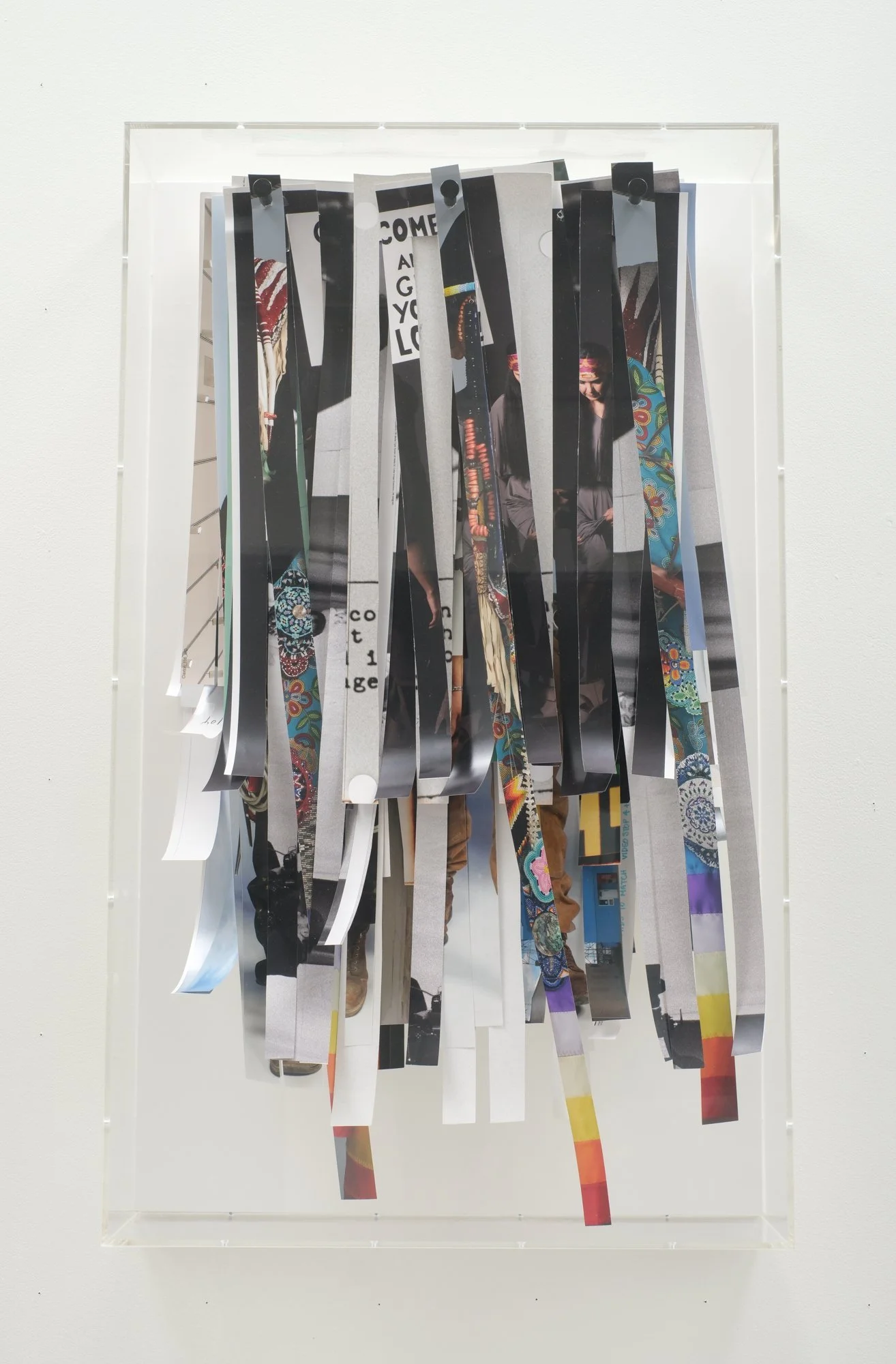
"Fringe 1," 2026. Multi-media: inkjet paper, chromogenic paper, transparency. Housed in plexiglass. 42 x 25 x 7.5 inches.
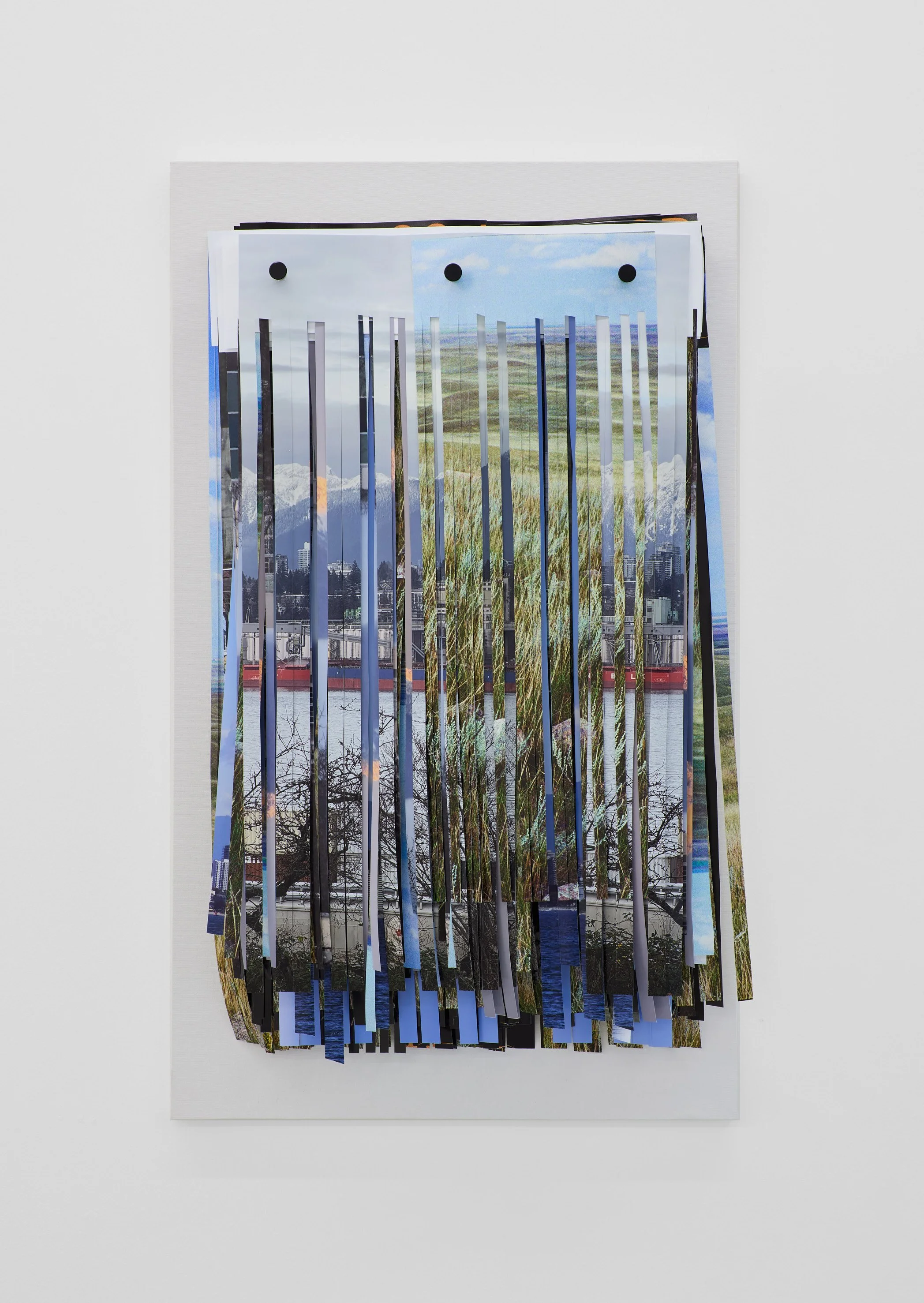
"Fringe 2," 2026. Multi-media: inkjet paper, chromogenic paper, transparency. 37.5 x 20.5 x 4.75 inches.
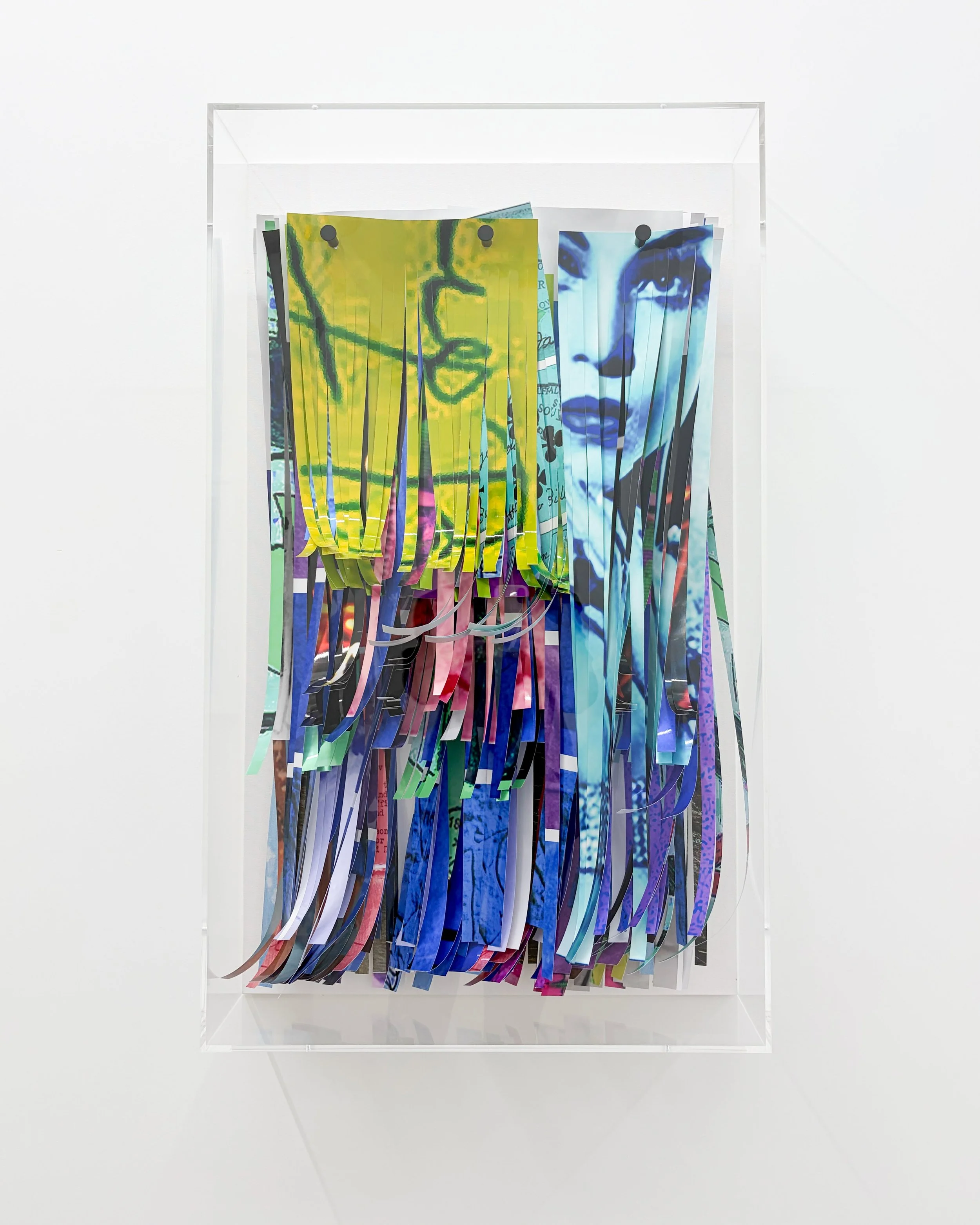
"Fringe 3," 2026. Multi-media: inkjet paper, chromogenic paper, transparency. Housed in plexiglass. 42 x 25 x 7.5 inches.
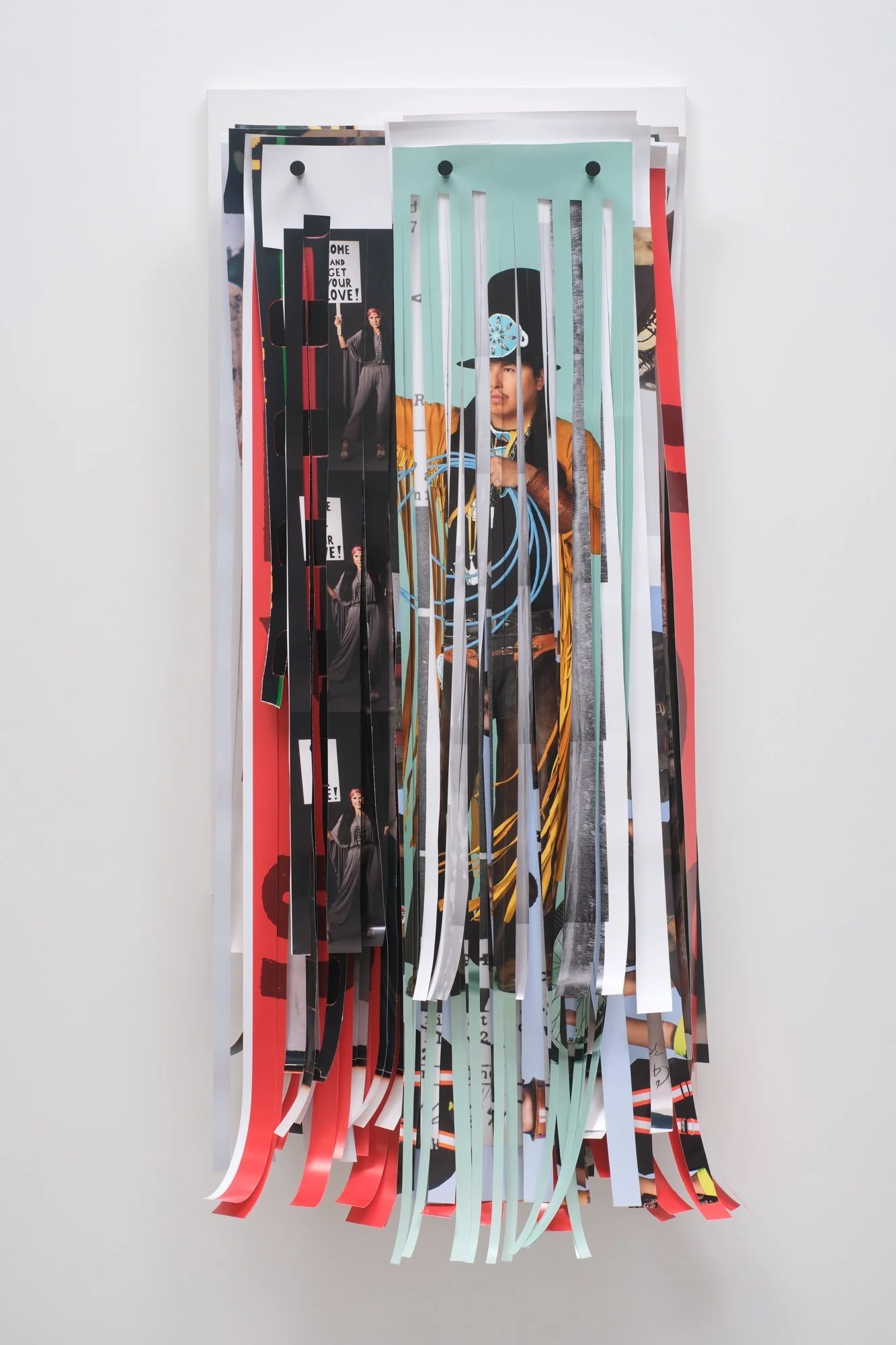
"Fringe 4," 2026. Multi-media: inkjet paper, chromogenic paper, transparency. 60 x 24.5 x 4 inches.
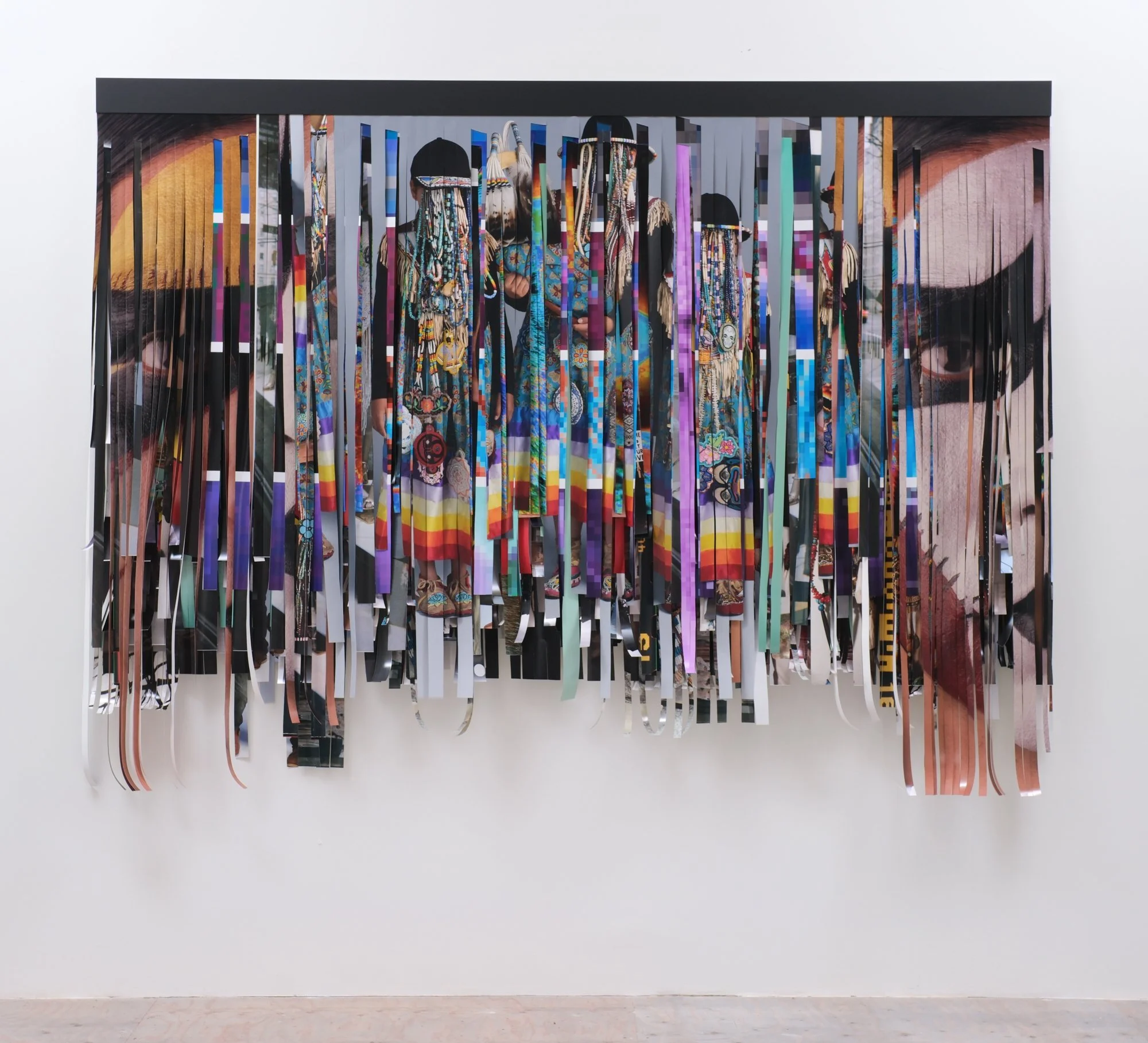
"Love Me Some Fringe for Tania," 2026. Multi-media: inkjet paper, chromogenic paper, transparency. 72 x 92 x 5 inches.